
If you are building a business you probably wear ten hats, sleep with your phone next to your pillow, and feel guilty whenever you are not working.
You are not lazy, you are not weak, you are in a high pressure environment that makes entrepreneur burnout incredibly common.
This guide will walk you through what entrepreneur burnout really is, real entrepreneur burnout statistics, how to avoid burnout as an entrepreneur in a practical way, and what entrepreneur burnout recovery looks like if you are already running on empty.
What is entrepreneur burnout, and why it hits founders so hard
Burnout is not just being tired. The World Health Organization describes burnout as a syndrome that comes from chronic workplace stress that has not been successfully managed, which shows up as exhaustion, distance or cynicism toward work, and reduced professional effectiveness.
For entrepreneurs, that stress is amplified. You are not only doing the work, you are also carrying the responsibility for payroll, investors, clients, and your own financial future. The same traits that make you a great founder, passion, persistence, high standards, can quietly push you toward burnout if you never switch them off.
Entrepreneur burnout is the point where your drive turns against you. You still care, but your body and brain cannot keep up.
Entrepreneur burnout statistics you should not ignore
Burnout is not a rare exception, it is becoming the norm among founders.
Recent surveys paint a worrying picture
- A 2024 survey reported that 53 percent of founders had experienced burnout, which shows how widespread entrepreneur burnout has become in the startup world
- Another report on business owners found that 42 percent had experienced burnout in the past month, and 24 percent were currently experiencing burnout, not just “a bit tired”
- One synthesis of entrepreneur mental health statistics suggests that more than 70 percent of founders are affected by a mental health condition, including anxiety, high stress, burnout, and impostor syndrome
- Research with small business owners shows that entrepreneurs tend to have fewer effective recovery experiences after work than employees, which keeps their stress system switched on for longer and increases the risk of burnout
These entrepreneur burnout statistics are not here to scare you, they are here to normalize what you are feeling and make the case for prevention. You are not alone, and nothing is wrong with you for needing a better system.
Early warning signs of entrepreneur burnout
Catching the early signs is one of the best ways to avoid burnout as an entrepreneur.
Physical signs
You might notice
- Constant fatigue, even after a “full” night of sleep
- Frequent headaches, muscle tension, or stomach issues
- Getting sick more often than usual
- Relying heavily on caffeine to function
Emotional and cognitive signs
Common emotional and mental signs of entrepreneur burnout include
- Feeling numb or cynical about a business you used to love
- Irritability with your team, clients, or family
- Difficulty concentrating, forgetting important details
- Feeling like nothing you do is good enough, no matter how much you work
Behavioral signs in your business
In the business itself, burnout often looks like
- Slower response times and constant procrastination on important tasks
- Perfectionism that keeps you from shipping
- Reactive decisions, changing strategy every few weeks because you feel desperate
- Avoiding financial numbers or key metrics because they trigger anxiety
If you recognize yourself here, the goal is not to add more guilt, it is to use these signs as data. Your body and brain are giving you feedback that something in your system needs to change.
How to avoid burnout as an entrepreneur, practical strategies
You cannot eliminate stress completely, but you can design your work in a way that your nervous system can sustain for years, not just for a launch.
Design a sustainable schedule, not a heroic one
Entrepreneurs often work more than traditional employees. One Gallup based report showed that a large share of small business owners work more than 60 hours per week. Score.org Long hours might feel noble, but they are not a long term strategy.
Set work hour boundaries
You do not need a perfect 9 to 5, but you do need clear start and stop times most days.
- Pick a realistic daily time window, for example 9 to 18 or 10 to 19, and commit to stopping work at that time
- Protect at least one full day per week with no business tasks, not even “just checking” email
- Use time boxing, assigning tasks to specific time blocks, so you are not “always working” in your head even when you are resting
Protect sleep and recovery
Sleep is not optional for high performance, it is the operating system.
- Aim for 7 to 9 hours of sleep, non negotiable most nights
- Build a simple wind down routine, low light, no work conversations, no financial spreadsheets in bed
- Add small daily recovery moments, five minutes of breathing, a short walk, or a coffee without your phone, to signal to your nervous system that you are safe
Build systems and delegate instead of carrying everything
A major driver of entrepreneur burnout is the feeling that “everything depends on me”.
- Document recurring processes, client onboarding, invoicing, content production, so you can delegate or automate step by step
- Start by delegating low risk tasks, scheduling, basic research, simple customer support, then gradually hand off more
- Invest time in training one or two reliable people, virtual assistants, freelancers, or employees, this time is an investment in your future energy
This shift from hero mode to systems mode is one of the most powerful ways to avoid burnout as an entrepreneur.
Separate your self worth from your business metrics
When revenue dips, many founders feel like they are personally failing. That emotional fusion accelerates burnout.
- Practice noticing the language in your head, “the launch failed” is very different from “I am a failure”
- Build identity anchors outside of entrepreneurship, friend, parent, musician, athlete, reader, so that you are not emotionally tied to one role
- Treat experiments as data, not verdicts on your value
You are a human who runs a company, not a company dressed up as a human.
Create a support ecosystem
Burnout thrives in isolation. Many entrepreneurs report feeling lonely and cut off from others, which amplifies mental health risks.
You can protect yourself by
- Joining entrepreneur peer groups or masterminds where people talk honestly about wins and struggles
- Being transparent with at least one person in your life about how you are really doing, not just the highlight reel
- Considering a therapist or coach familiar with founder issues, especially if anxiety or low mood are constant companions
Support is not a luxury, it is infrastructure.
Reduce money stress with a realistic runway plan
Financial pressure is one of the biggest stressors behind entrepreneur burnout.
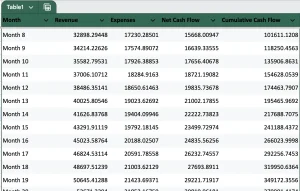
- Build a simple cash flow forecast for the next 6 to 12 months
- Identify your minimum personal and business runway, what you truly need to survive, not the inflated version
- Explore ways to stabilize income, retainers, payment plans, recurring services, instead of relying only on launches
- Consider part time freelance or consulting work as a bridge, this is not failure, it is strategy
Clarity reduces anxiety, even when the numbers are not perfect.
Entrepreneur burnout recovery, what to do if you are already exhausted
Sometimes you read about prevention too late. If you already feel drained, detached, or hopeless about the business, entrepreneur burnout recovery is possible, but it requires more than a weekend off.
Here are key steps.
- Acknowledge that burnout is a real condition
Recognize that you are dealing with a legitimate occupational phenomenon, not a personal defect. This recognition can reduce shame and make it easier to ask for help. - Get a professional assessment
Talk to a healthcare professional, ideally one who understands stress, sleep, and mood disorders. They can help you differentiate between burnout, depression, and anxiety, which often overlap but are treated differently. - Reduce load before adding “self care”
If your workload remains impossible, no amount of meditation will fix burnout. Look for ways to
- Pause or cancel non essential projects
- Renegotiate deadlines with clients or investors
- Say no to new commitments for a defined period
- Create a structured recovery plan
Entrepreneur burnout recovery usually involves weeks or months, not days. A realistic plan might include
- A temporary reduction in working hours
- A consistent sleep and exercise routine
- Weekly therapy or coaching sessions
- Checkpoints to reassess workload and business model
- Rebuild your business around sustainability
As your energy returns, adjust your business model so you do not repeat the same pattern, higher pricing, clearer boundaries, more systems, fewer but better clients.
Remember, recovery is not going backward, it is redesigning your life and business with better information about your limits.
FAQ about entrepreneur burnout
Is burnout the same as stress?
No, stress is usually short term and linked to a specific situation, a launch, a big client, while burnout is the result of chronic, unmanaged stress that leads to exhaustion, cynicism, and reduced effectiveness.
Can taking a vacation fix entrepreneur burnout?
A vacation can help, but if you return to exactly the same conditions, overload, no boundaries, isolation, the relief will be temporary. Real entrepreneur burnout recovery combines rest with structural changes in how you work.
How long does entrepreneur burnout recovery take?
It varies widely. Some founders feel significantly better in a few weeks once they reduce workload and improve sleep, others need several months. The important thing is to treat recovery as a process, not as a quick hack.
When should I seek professional help?
Seek professional help if you notice persistent low mood, loss of interest in things you normally enjoy, thoughts that life is not worth it, or physical symptoms like chest pain or panic attacks. A qualified professional can guide you through both the mental health side and practical adjustments.
You are allowed to build something meaningful without destroying yourself in the process. Protecting your energy is not a distraction from your business, it is one of the smartest investments you can make in its long term success.

I’m a freelance writer specializing in clear, useful, and inspiring content on health, wellness, personal finance, and entrepreneurship. I’m passionate about research, turning complex information into simple, actionable insights, and helping people make smarter decisions to improve their lives.
I write about healthy habits, nutrition, emotional well-being, money management, professional growth, and practical strategies for purpose-driven entrepreneurship.